
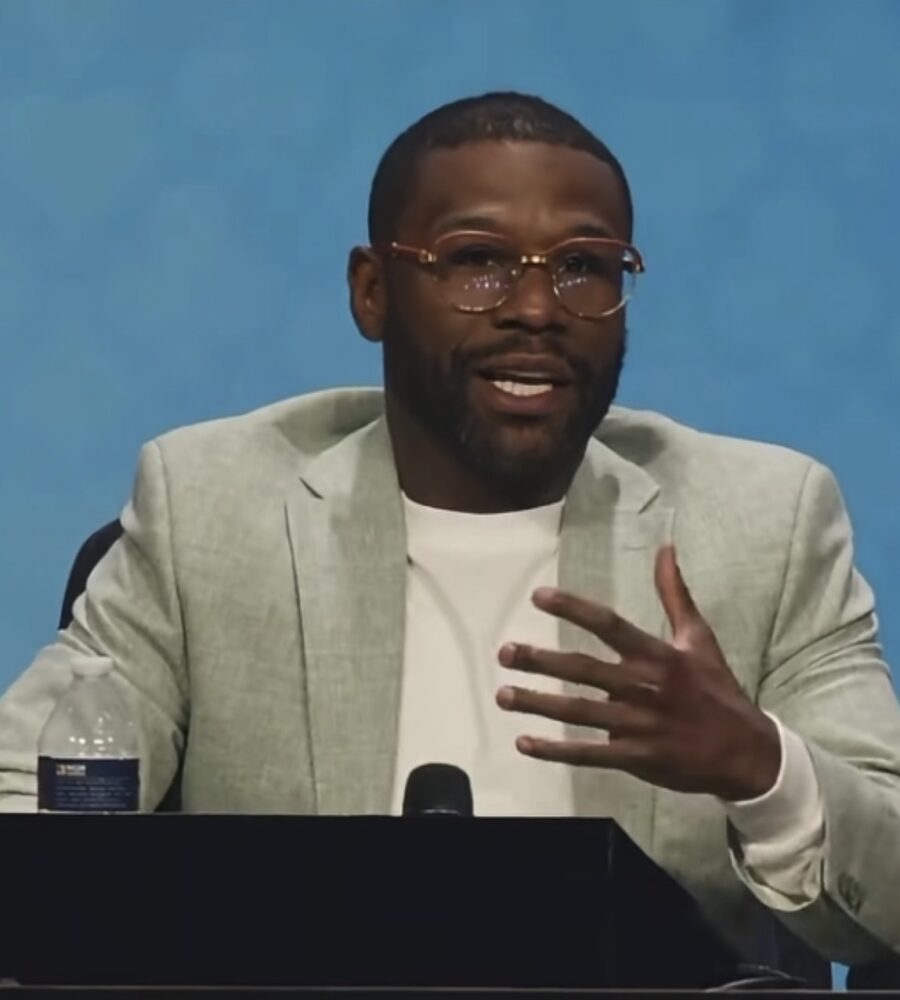
Boxing legend Floyd Mayweather Jr. has shared a rare personal connection to one of the most infamous nights in hip-hop history.
In a recent interview sighted by kmjofficial.com, the undefeated 50-0 champion revealed that he was scheduled to hang out with rap icon Tupac Shakur on September 7, 1996—the night the 25-year-old artist was fatally shot on the Las Vegas Strip.
“Floyd Mayweather was supposed to party with Tupac the night he died,” Mayweather recalled, reflecting on how close their paths crossed just hours before the tragic drive-by shooting.
A Fateful Night in Las Vegas
The night of September 7, 1996, remains etched in pop culture history. Shakur had spent the evening attending the Bruce Seldon vs. Mike Tyson heavyweight championship fight at the MGM Grand Garden Arena alongside Suge Knight.
Mayweather, who was a 19-year-old rising boxing talent preparing to turn professional after winning an Olympic medal earlier that summer, was living in Las Vegas at the Meridian Apartments near Flamingo Road and Koval Lane—just steps away from where the shooting took place.
Plans were lined up for Mayweather to join Tupac’s entourage later that evening for an afterparty following Tyson’s victory. However, as fate would have it, the two never met up. Shortly after 11:00 PM, a white Cadillac pulled up alongside the BMW carrying Shakur and Knight at a red light on Flamingo Road, opening fire and striking Shakur four times. The rapper succumbed to his injuries six days later on September 13.
History, Proximity, and Legacy
Mayweather has frequently spoken about his deep admiration for Tupac’s legacy, calling him a “genius” whose music inspired him during his early days as a young fighter.
Over the years, Mayweather’s connection to the tragedy has drawn public interest. Resurfaced archival footage previously showed Mayweather showing late director John Singleton the intersection near where the shooting occurred, emphasizing how close he lived to the site at the time of the event.
Reflecting on the near-encounter, Mayweather’s story serves as a stark reminder of how close two defining figures of sports and culture came to crossing paths on one of music’s darkest nights.