There was a time when Ghanaian and Nigerian movies were not simply competing on the same screen.
They were building a relationship.
Actors travelled between Accra and Lagos, producers crossed borders, and audiences in both countries began to recognise the same faces. Long before this became normal, one Ghanaian actor was already walking through that door.
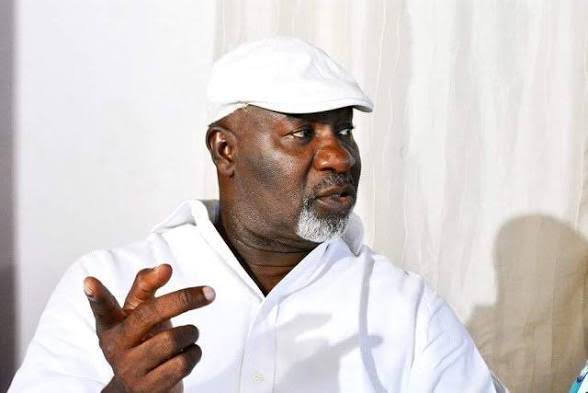
His name was Emmanuel Armah.
Born in August 1959 in Kumasi, Emmanuel Armah became one of the familiar faces of Ghanaian cinema during its golden era. He was an actor with a commanding presence, a deep voice and the ability to move comfortably between serious drama, action and intense character roles.
But his importance goes beyond the number of movies he appeared in.
According to legendary Nigerian actor Pete Edochie, Emmanuel Armah was the first Ghanaian actor to star in a Nigerian film production, making him an important figure in the early Ghana-Nigeria movie relationship.
That meant that before Ghanaian actors regularly appeared in Nollywood productions, Emmanuel Armah had already crossed that border.
He helped show that a Ghanaian actor could travel to Nigeria, work with Nigerian filmmakers and become part of a story meant for audiences across West Africa.
And the doors that opened after that would eventually be used by many other Ghanaian actors.
Emmanuel’s own acting career stretched across more than two decades.
He became particularly known for movies such as Escape to Love, Love Birds, The Supremo, Thug Love and Cartel: The Genesis.
His filmography also included productions such as Every Woman Wants Me, Fresh Trouble, Things Men Do, Beyond Love and Shadows from the Past.
In Thug Love, he played General Okagie, while in Cartel: The Genesis, released in 2015, he gave one of his later major performances before his health problems took him away from the screen.
What made Emmanuel Armah special was his versatility.
He could play the respectable professional.
He could play the strict father.
He could become the powerful man in the room.
And when the story demanded it, he could take on a much darker and more aggressive character.
His strong voice and commanding screen presence made him particularly effective in roles that required authority.
For years, he was one of those actors whose appearance in a movie immediately made you pay attention.
But while his professional life was visible to the public, Emmanuel Armah kept much of his personal background private.
There is limited publicly documented information about his parents, childhood and formal schooling. What is known is that he was born and raised in Kumasi, one of Ghana’s major cultural centres, and eventually found his way into acting.
He did not make his private life the centre of his public image.Instead, he allowed his work to speak for him.
Then, in November 2015, his life changed dramatically.
While he was in the United States, Emmanuel Armah suffered a major stroke. Reports about his condition have attributed the stroke to previously undetected high blood pressure and high cholesterol.
The illness severely affected his mobility and speech.
The actor who had once moved confidently across movie sets was now facing a completely different reality.
For years, his health kept him away from the cameras.
He eventually became dependent on a wheelchair and required continued care.
Throughout this difficult period, his wife, Stella Amina Armah, has been reported to have remained by his side and helped care for him.
For almost eleven years, the man who once entertained millions through Ghanaian and Nigerian movies has lived largely away from the public eye.
Then came September 2026.
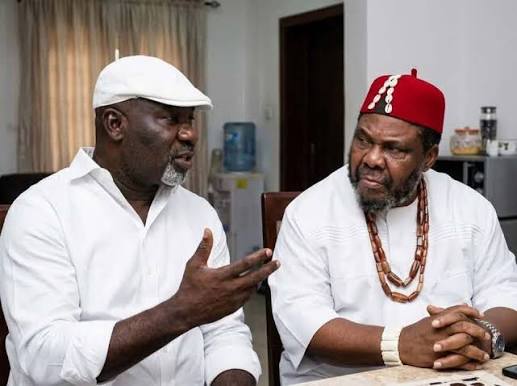
During Pete Edochie’s legacy tour in Ghana, the veteran Nigerian actor visited Emmanuel Armah at his residence in Accra.
It was a deeply emotional reunion.
The two men who had shared the screen and part of West Africa’s cinematic history met again after many years.
But this time, the circumstances were very different.
A video from the visit showed Pete Edochie becoming visibly emotional as he saw the condition of his old friend.
The meeting was more than just a visit between two actors.
It was a reminder of a friendship and a professional relationship that had its roots in an important period in West African cinema.
Pete Edochie also made a financial donation towards Emmanuel Armah’s medical care.
For many Ghanaians who saw the images, it was difficult not to remember the younger Emmanuel Armah the strong, energetic actor who once dominated movie screens.
The actor who travelled between Ghana and Nigeria.
The actor who played fathers, professionals, powerful men and villains.
The actor whose voice could make a scene feel serious.
And perhaps most importantly, the actor who helped establish a path for Ghanaian performers into Nigerian cinema.
Today, Emmanuel Armah’s name is not only part of Ghana’s movie history.
It is also part of the history of Ghana-Nigeria cinematic collaboration.
The younger generation may know Nollywood and Ghallywood as industries where actors regularly cross borders.
But there was a time when that was not yet the norm.
Actors like Emmanuel Armah helped make that relationship possible.
His story is therefore not simply about an actor who appeared in more than 40 productions.
It is about a pioneer who crossed a border before the road became familiar.
It is about a man who spent decades entertaining audiences and eventually faced a life-changing illness away from the spotlight.
And it is about the enduring power of friendship, as demonstrated when Pete Edochie travelled to Ghana in 2026 to see his old friend.
Emmanuel Armah may no longer be on our screens, but the characters he created and the doors he helped open remain part of the history of Ghanaian cinema.
From Kumasi to Lagos, from Ghallywood to Nollywood, Emmanuel Armah left his footprints.
The screen may have gone quiet, but the legacy remains.
By Beninson Moses