





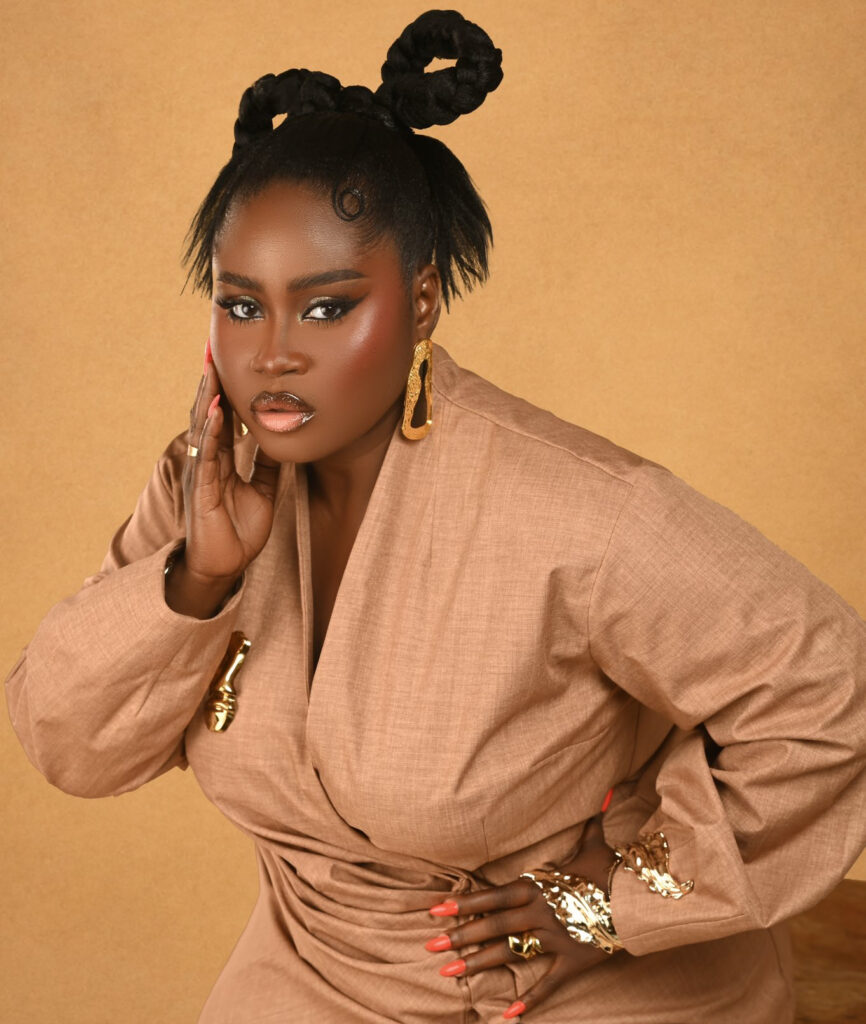
Long before red carpets, brand endorsements, and millions of followers turned her every public appearance into headline fodder, award-winning Ghanaian actress Lydia Forson was just another University of Ghana student dancing on the sand for a $100 prize—with zero fear that the entire country would wake up dissecting her moves on their phones.
In a candid post on X (formerly Twitter) amid raging online debates over what young women wore to the 2026 Tidal Rave Festival, Forson pulled back the curtain on a vastly different era of Ghanaian youth culture. “Legon Hall Week. Beach Party. I won $100 in a dance competition @TheRealBolaRay MC’d. Let’s just say thank God there was no social media (or it wasn’t popular). Only images I have are those from ‘photooo.’ Got to be young, wild & free…” she wrote.
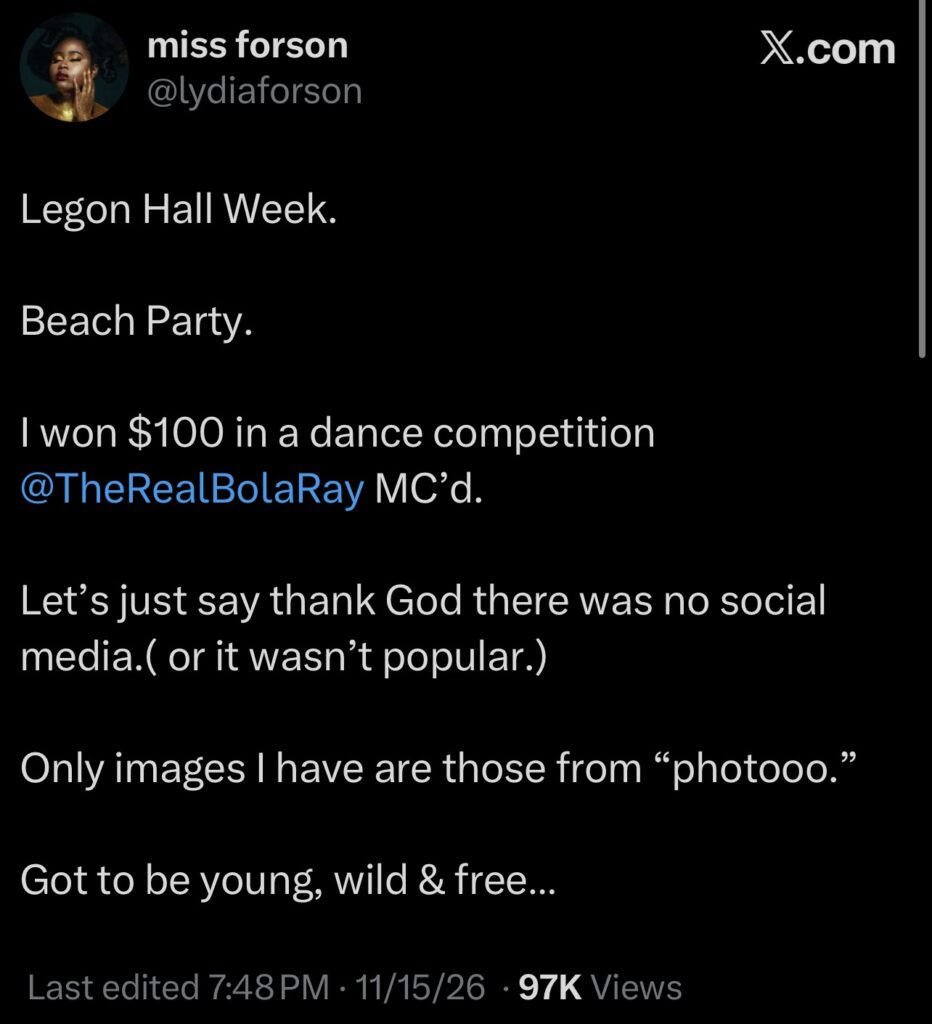
The short reflection instantly struck a chord, not merely as a nostalgic throwback to campus life at Legon, but as a stark illustration of two competing realities: the unscripted anonymity she enjoyed as a carefree university student, and the hyper-surveilled reality she navigates today as one of West Africa’s most recognizable public figures.
The Luxury of Being Unknown
During Forson’s student days at the University of Ghana—long before she graduated and went on to become an Africa Movie Academy Award-winning screen icon—Hall Week beach parties were legendary rites of passage. A young Bola Ray could hype a roaring crowd on the microphone, students could dance without inhibition, and the only visual record of the afternoon came from roaming beach photographers colloquially known as “photooo.”
In that analog era, memory belonged strictly to the person who paid a few cedis for a glossy print. If you danced wildly or dressed boldly, the evidence stayed tucked inside a physical photo album in a hostel room, unseen by employers, moral gatekeepers, or strangers scrolling from their living rooms. Being “young, wild, and free” came with an invisible safety net: the freedom to be imperfect in private.
The Weight of Celebrity Power in 2026
Today, that freedom is virtually extinct—especially for someone wielding Forson’s cultural clout. As a prominent actress, producer, and outspoken social commentator whose tweets routinely spark national conversations, Forson operates in an ecosystem where every outfit, facial expression, and off-the-cuff remark is archived, clipped, and monetized within seconds.
Celebrity power in the social media age brings massive reach, commercial influence, and a platform to shape public discourse. Yet, as Forson’s post subtly underscores, it also strips away the very anonymity that makes youth feel effortless. Where an unknown Legon student could pocket $100 and disappear back into the crowd, a modern celebrity—and increasingly, any ordinary young woman attending a beach festival—steps onto the sand under the lens of thousands of smartphones and engagement-hungry blogs.
A Generational Mirror
By contrasting her “photooo” keepsakes with today’s relentless digital spotlight, Forson effectively challenged the selective amnesia fueling the backlash against young female festivalgoers at events like Tidal Rave. Her message carried an unmistakable subtext: today’s youth are not behaving any more boldly than previous generations did on Accra’s beaches; they are simply doing it in an era where privacy no longer exists.
For Forson, looking back at that $100 dance victory is a reminder of a freedom that even her immense stature today cannot buy back—the simple privilege of living in the moment without the whole world watching.



Reader comments