





In the quiet hum of a London vault, over 1,300 reels of 16mm and 35mm celluloid sat in the dark for decades. They held more than 200 hours of fragile, silver-halide memory—the moving, breathing record of a newly born African nation stepping onto the world stage.
Directed by Academy Award-winner Ben Proudfoot, executive produced by Barack and Michelle Obama’s Higher Ground Productions, and brought to a massive global youth audience in November 2026 by producer and streamer IShowSpeed, the documentary The Eyes of Ghana (often affectionately referred to by audiences as In the Eyes of Ghana) is far more than a biography of Dr. Kwame Nkrumah. It is the story of the man who stood beside him with a camera, risking his life to ensure that the visual truth of Ghana’s birth would never be erased.
A Vivid Account: The Cameraman and the Osagyefo
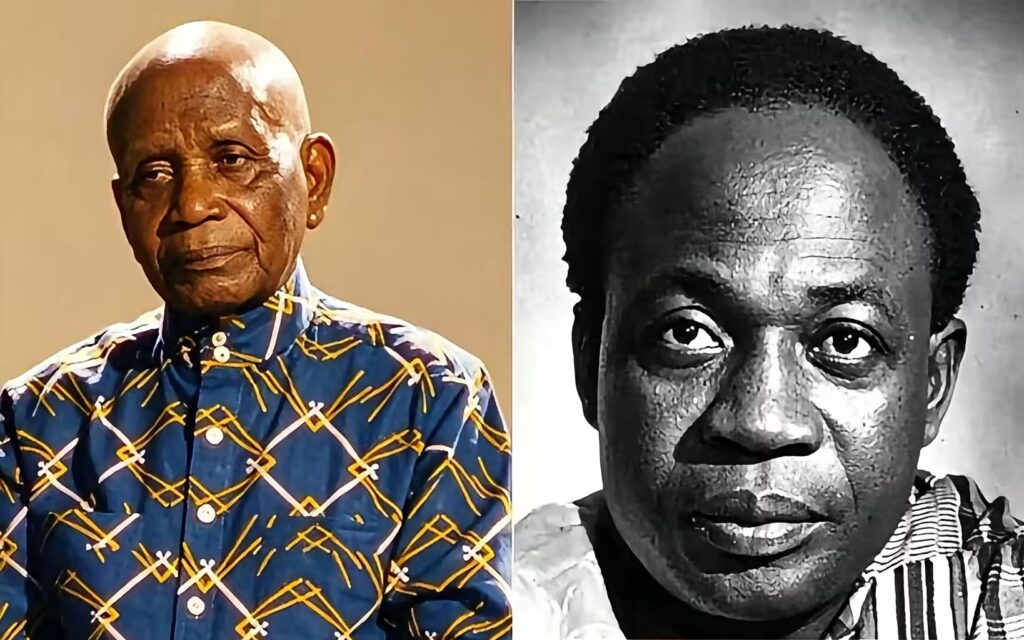
The heart of the film beats through Rev. Dr. Christian Tsui Hesse, a 93-year-old Ghanaian cinematographer, pastor, and national treasure. Born in Osu in 1932 when the Gold Coast was still firmly under British colonial rule, Hesse grew up in a strict Presbyterian household where cinema was forbidden. Yet, captivated by the magic of light and shadow, he sneaked out to watch movies, eventually training at the colonial government’s film school.
When Kwame Nkrumah rose to lead the Gold Coast toward self-governance, he recognized a critical truth: colonial films portrayed Africans as primitive and subservient. To liberate the mind, Ghana had to control its own image. Nkrumah appointed young Chris Hesse as his personal cinematographer.
For a decade (1956–1966), Hesse became a one-man film unit—cameraman, director, and editor—and Nkrumah’s constant shadow. Often the only Black cameraman in rooms filled with international press, Hesse developed an unspoken, intimate language with the President; Nkrumah would subtly tap his walking stick to signal when Hesse should roll the camera and when to cut.
Through Hesse’s lens, the documentary resurrects vivid, breathtaking moments:
- The Midnight Declaration (1957): The lowering of the British Union Jack and the raising of the red, gold, and green flag with the Black Star, captured not by foreign observers, but by a son of the soil.
- Pan-African Diplomacy: Nkrumah addressing the United Nations, walking triumphantly through Harlem where he once studied, and sitting face-to-face with U.S. President John F. Kennedy.
- Nation-Building in Motion: The construction of the Akosombo Dam on the Volta River, the rise of factories, schools, and infrastructure, and the electric energy of a continent watching Ghana lead the charge against colonialism.
Then came the dawn of February 24, 1966. While Nkrumah was abroad on a peace mission, the military overthrew his government. In the chaos that followed, statues of Nkrumah were toppled, and the new regime ordered the systematic destruction of his filmed archives—burning reels in an attempt to wipe his legacy from collective memory. Unbeknownst to the coup leaders, Hesse had sent duplicates and negatives to London for processing and safekeeping, quietly preserving over 1,300 reels.
Decades later, battling failing eyesight—a poignant sacrifice for a man who spent his life capturing light—Hesse teams up with young Ghanaian filmmaker Anita Afonu and Edmund Addo, the elderly caretaker of Accra’s historic, crumbling Rex Cinema. Together, they restore the dilapidated open-air theater and digitize a fraction of the reels to screen Ghana’s forgotten glory beneath the night sky.
Impact on the Gold Coast and the Birth of Modern Ghana
The events chronicled in The Eyes of Ghana altered the trajectory of both the Gold Coast and the African continent:
- Psychological Decolonization: During the Gold Coast era, British colonial cinema units used mobile vans to screen propaganda designed to reinforce imperial superiority. By establishing the Ghana Film Industry Corporation and deploying Hesse, Nkrumah flipped the gaze. Seeing themselves on screen as engineers, diplomats, and sovereign citizens shattered the colonial inferiority complex among everyday Ghanaians.
- Catalyzing Continental Liberation: Nkrumah’s declaration that “the independence of Ghana is meaningless unless it is linked up with the total liberation of the African continent” was not merely spoken—it was filmed, distributed, and seen. Hesse’s footage served as visual proof to freedom fighters in Kenya, Algeria, Congo, and South Africa that Black self-rule was achievable.
- The Trauma of Historical Erasure: The 1966 coup and the burning of the archives created a profound generational disconnect. By destroying the visual record of the First Republic, post-coup regimes robbed subsequent generations of an objective look at how rapidly Ghana was industrializing, leaving a vacuum filled by partisan distortion and historical amnesia.
Essential Lessons Every Ghanaian Should Learn
The Eyes of Ghana refuses to turn Nkrumah into a flawless myth. It captures both the soaring brilliance of his vision and the painful contradictions of his later rule—including the Preventive Detention Act, economic strain, and the slide toward one-party authoritarianism. From this honest portrait emerge critical lessons:
- Whoever Controls the Narrative Controls the Future: As Chris Hesse warns in the film, “Just because you don’t know the story doesn’t mean it never happened.” When Ghanaians neglect their own archives, museums, and film industries, outsiders end up defining African history.
- Nuance Over Hero-Worship or Demonization: Ghanaians must learn to hold two truths at once. One can celebrate Nkrumah’s unmatched foresight in infrastructure, education, and Pan-African unity while candidly critiquing the dangers of unchecked executive power and political intolerance.
- The High Cost of Institutional Neglect: The near-ruin of the historic Rex Cinema and the decades-long abandonment of Hesse’s reels in a foreign vault reflect a national habit of allowing vital heritage sites and institutions to decay. Progress requires maintenance, not just inauguration.
- Intergenerational Mentorship is Sacred: Hesse’s partnership with Anita Afonu demonstrates that elders must deliberately pass the torch—and the tools—to the youth before their knowledge fades.
Shaping the Future for Generations Unborn
If The Eyes of Ghana is to be more than a momentary wave of nostalgia, it must serve as a blueprint for how Ghanaians build the decades ahead:
- Reclaiming and Digitizing the Remaining Archive: Only 15 minutes of Hesse’s 200+ hours of footage appear in the documentary. Repatriating, digitizing, and making the remaining 1,300 reels accessible in Ghanaian schools, universities, and public libraries will give young citizens tangible evidence of their ancestors’ ambition and capability.
- Investing in Creative Sovereignty: In the digital age, storytelling is economic and geopolitical power. Ghana must treat its filmmakers, archivists, writers, and technologists as strategic nation-builders—funding local production infrastructure so Ghanaian stories are owned, produced, and distributed from Accra to the world.
- Reviving Civic Spaces: Restoring landmarks like the Rex Cinema and transforming monuments like the Kwame Nkrumah Memorial Park into vibrant centers of civic education ensures that history is lived in daily public spaces rather than locked away.
- Restoring Audacious Vision to Leadership: The Gold Coast generation dared to imagine a self-reliant, industrialized, united Africa. Generations unborn deserve leaders and citizens who think beyond four-year election cycles and build enduring infrastructure—the modern equivalents of the Akosombo Dam and Tema Harbour—with integrity, accountability, and democratic respect.
Ultimately, Chris Hesse’s final admonition echoes as a charge to every living Ghanaian and every child yet to be born: “Don’t be afraid, keep filming.” Keep documenting, keep building, and never allow the light of Ghana’s true story to go out again.



Reader comments